Vietnam Hospital Debuts International Conference on Cold Plasma Therapy for Wounds, Skin, and Musculoskeletal Care
Apr 10, 2026
General Vibronics PR
News
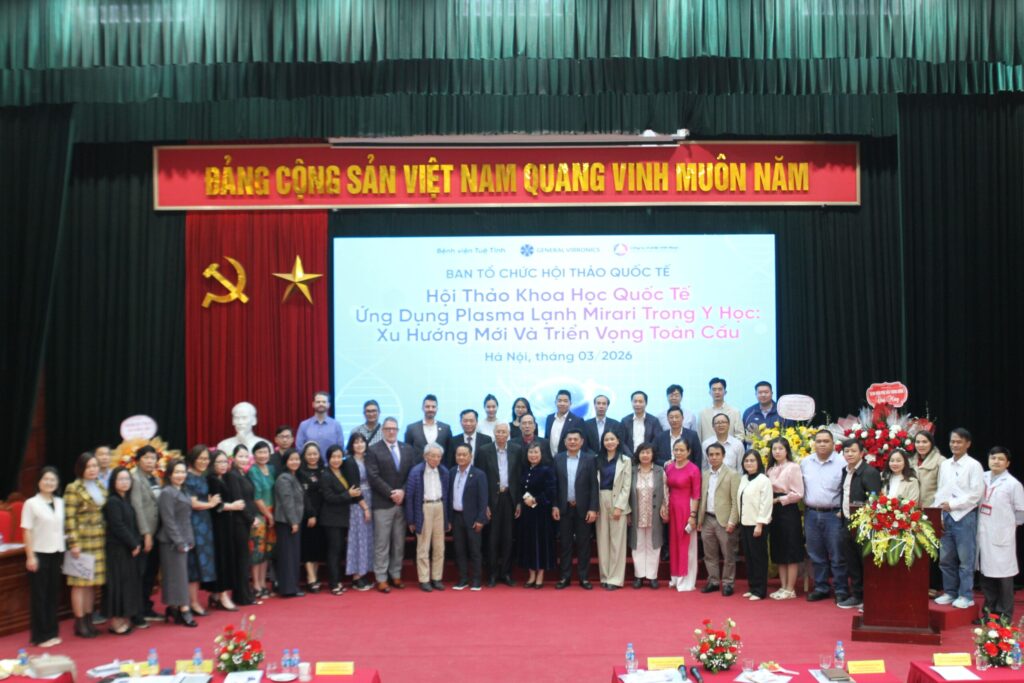
On March 7, 2026, Tue Tinh Hospital — the clinical arm of the Vietnam University of Traditional Medicine — hosted a landmark international scientific conference on the medical applications of cold atmospheric plasma (CAP), presenting early-stage clinical findings across wound care, dermatology, and musculoskeletal rehabilitation. The event, titled “Applications of MIRARI® Cold Plasma in Supporting the Treatment of Wounds, Dermatology, and Musculoskeletal Conditions,” brought together physicians from Tue Tinh Hospital, Hoe Nhai General Hospital, researchers, and biomedical technology partners to evaluate the proprietary MIRARI® system developed by General Vibronics — an FDA-cleared handheld device now being tested within Vietnam’s traditional medicine network[1]. The conference arrives as global momentum for CAP accelerates: in October 2025, the European Wound Management Association (EWMA) published a dedicated clinical document declaring CAP “holds great promise as a sustainable, advanced therapy in wound treatment”[2], and Vietnam’s medical device market is forecast to reach USD 3.69 billion by 2034, growing at an 8.50% CAGR[3].
The Tue Tinh conference represents one of the first formal academic forums in Southeast Asia dedicated to evaluating cold atmospheric plasma within an integrative medicine framework. Its significance extends beyond a single hospital event: it reflects the convergence of three major trends reshaping Vietnamese healthcare[1].
First, international scientific validation of CAP is accelerating. The EWMA document — published in the Journal of Wound Management — reviewed available scientific evidence, evaluated the potential and challenges of CAP in wound management, examined currently available therapies, and addressed safety and regulatory considerations. It concluded that while CAP may still need to fully realize its potential, it represents a genuinely new and sustainable therapeutic modality[2][4].
Second, clinical evidence continues to accumulate globally. A comprehensive systematic review published in Frontiers in Medicine in February 2025 confirmed that CAP generates reactive oxygen and nitrogen species (ROS/RNS) that accelerate tissue regeneration, reduce bacterial load, and prevent biofilm formation, demonstrating efficacy in improving wound healing metrics for both chronic and acute wounds[5]. Meanwhile, at least two new randomized controlled trials registered on ClinicalTrials.gov in 2025–2026 are actively evaluating CAP for wound healing in critically ill patients and chronic wound management[6][7].
Third, Vietnam’s regulatory and market landscape is increasingly favorable. Vietnam’s medical device market — valued at USD 1.77 billion in 2025 — is experiencing rapid expansion driven by government-backed digital health investments totaling VND 30 trillion (USD 1.26 billion) under the National Digital Transformation Program[3][8]. Decree 98/2021/NĐ-CP classifies medical devices into four risk levels (A–D), with Class C and D devices requiring registration with the Ministry of Health and ISO 13485 compliance[8].
The MIRARI® Cold Plasma System (GV-M2-01) is a handheld medical device manufactured by General Vibronics, Inc. (Tempe, Arizona, USA). It received FDA 510(k) clearance on November 21, 2024 (number K242553), classified under 21 CFR 878.4400[9]. According to the FDA 510(k) summary, the device is indicated for “elevating tissue temperature for selected medical conditions such as temporary relief of pain, muscle spasms and increase in local circulation”[10]. The system employs Dielectric Barrier Discharge (DBD) technology to generate cold atmospheric plasma at temperatures safe for biological tissue[1].
Cold atmospheric plasma — the fourth state of matter — is a low-temperature, partially ionized gas that produces biologically active agents when ambient air interacts with charged particles[5][11]. The therapeutic mechanisms operate through three clinically relevant pathways:
CAP-generated ROS/RNS disrupt microbial cell membranes and neutralize biofilms — a critical barrier in chronic wound management. In a pivotal controlled trial published in Nature Scientific Reports, 58.97% of patients treated with a CAP-jet achieved complete healing of chronic ulcers after 6 weeks, compared with only 5.13% in the standard dressing control group[12]. This antimicrobial effect extends to drug-resistant organisms: a 2026 case report from Taipei Veterans General Hospital documented complete eradication of Klebsiella pneumoniae infection in a chronic post-surgical wound after 19 CAP sessions without adverse effects[11].
Plasma interacts with immune cells and molecular mediators at the tissue level, increasing interleukin-17, promoting cell differentiation, and recruiting neutrophils and macrophages to injury sites through upregulation of IL-1β and TNF-α[11]. In keratinocytes, CAP treatment induces significant upregulation of TGF-β1 and TGF-β2 on both mRNA and protein levels — growth factors essential for tissue remodeling[5].
CAP stimulates nitric oxide synthesis from fibroblast cells and macrophages, correlating with angiogenesis and epithelialization processes[11]. The Frontiers in Medicine review noted that CAP enhances fibroblast proliferation, keratinocyte migration, collagen synthesis, and microcirculation — the core building blocks of wound repair[5]. Importantly, CAP may also hold potential in preventing scar development by suppressing TGF-β1, lowering α-SMA and COL1, with treated acute wounds in animal models showing significantly reduced scar width[5].
Physicians from Tue Tinh Hospital and Hoe Nhai General Hospital presented early-stage clinical observations across three therapeutic domains using the MIRARI® system[1].
Clinicians reported using MIRARI® alongside electroacupuncture (EA) for periarthritis of the shoulder, observing potential for pain reduction and improved range of motion[1]. This combination has a credible scientific foundation. A 2022 systematic review and meta-analysis published on PMC/NIH — encompassing 13 studies and 936 patients — found that EA significantly reduced frozen shoulder pain compared to manual acupuncture (MD −1.11, 95% CI −1.61 to −0.61, p < 0.0001), improved functional outcomes (SMD 2.02, 95% CI 0.36–3.69, p < 0.00001), and increased response rates (RR 1.16, 95% CI 1.07–1.25, p = 0.0002)[13]. No adverse effects were reported in any included study[13].
The rationale for combining EA with CAP lies in their complementary mechanisms: EA achieves analgesia through endogenous opioid release, serotonin and norepinephrine modulation, and inflammatory cytokine suppression[13], while CAP contributes independent anti-inflammatory and tissue-regenerative effects through ROS/RNS pathways[5]. This dual-modality approach represents a novel integrative protocol that warrants formal investigation in controlled trials.
Conference presentations described complementary benefits when MIRARI® was integrated with traditional medicine modalities for managing acne vulgaris[1]. Emerging global evidence supports this direction. A scoping review published in the Journal of Integrative Dermatology (February 2025) analyzed 12 human studies on CAP in inflammatory and infectious dermatology, finding that CAP demonstrated “more impressive results for inflammatory rather than infectious conditions”[14].
Specifically for acne, a randomized controlled trial by Karrer et al. (2021) treated 34 patients with moderate bilateral papulopustular acne over 4–6 weeks (8–10 sessions). CAP-treated inflammatory lesions were significantly reduced at last treatment (p = 0.020), two-week follow-up (p = 0.002), and four-week follow-up (p = 0.040). Patients reported significant improvement on the Global Aesthetics Improvement Scale (GAIS) for treated lesions at all time points (p < 0.05)[14].
A larger trial currently recruiting on ClinicalTrials.gov is evaluating CAP for moderate-to-severe acne vulgaris. Preliminary data from a prior study at Mae Fah Luang University (Thailand) showed weekly CAP treatment over six weeks in 31 volunteers led to approximately 75% reduction in lesion count, with the greatest improvement in inflammatory lesions. Adverse events were mild, including transient dryness and superficial exfoliation[15].
Clinical case reports at the conference evaluated MIRARI® technology for post-hemorrhoidectomy wound management, assessing its capacity to support pain relief, microbial control, and accelerated healing[1]. This application aligns with growing international evidence for CAP in post-surgical wound care. The February 2026 PMC case report documented a 52-year-old burn patient with chronic postoperative wound secondary to flap necrosis and persistent Klebsiella pneumoniae infection despite standard wound care and antibiotic therapy. After 2 courses of CAP treatment totaling 19 sessions, the patient achieved successful wound healing and complete bacterial eradication without adverse effects, with wounds remaining fully epithelialized at 1-year follow-up[11].
General Vibronics has stated its commitment to advancing clinical research through global collaboration, supporting healthcare institutions with technology transfer and specialized training for medical personnel. The conference at Tue Tinh Hospital marks a step toward building a collaborative research network aimed at validating and expanding cold plasma applications globally[1].
For Vietnam’s healthcare system, several factors create favorable conditions for CAP integration. Over 85% of advanced medical devices are currently imported, and the government is actively promoting technology transfer through preferential tax policies — including a 10% corporate income tax rate for 15 years for high-tech manufacturing enterprises, with full exemption for the first 4 years and a 50% reduction for the following 9 years[8]. The traditional medicine hospital network, exemplified by Tue Tinh Hospital, provides a natural institutional infrastructure for integrative CAP protocols that combine plasma technology with established modalities like electroacupuncture[1].
However, caution is essential. The findings presented at the conference remain early-stage observations, not validated endpoints from controlled trials. As the EWMA document emphasizes, translating CAP into routine clinical practice requires addressing critical challenges: standardizing treatment protocols, conducting large-scale randomized controlled trials, assessing long-term safety, and developing reimbursement pathways[2]. The Frontiers in Medicine review reinforced this position, noting that despite promising results, “future research should prioritize optimizing CAP parameters and exploring combination therapies to maximize its therapeutic potential”[5].
The Tue Tinh conference signals Vietnam’s growing role in the global cold atmospheric plasma research landscape. As the body of evidence expands — from EWMA endorsements to newly registered RCTs — cold plasma technology is transitioning from laboratory promise to bedside evaluation. Follow this space for updates as formal clinical trial results from these early investigations become available.
International Scientific Workshop on the Application of MIRARI Cold Plasma in Medicine Held at Tue Tinh Hospital
Cold Plasma: An Emerging Technology for Clinical Use in Wound Healing
Vietnam’s Medtech sector and the regulations governing market entry and operations